
Humanists and friends who have stood alongside the LGBT+ community.
The history of LGBT+ rights in Australia did not belong only to LGBT+ people. From the earliest campaigns of the 1960s — when no LGBT+ organisation could legally exist — it was humanists, rationalists, and people of conscience who first raised their voices publicly in defence of equality. Straight humanists were, in the words of Andrew Copson of Humanists UK, “really the earliest allies of gay people.”
That tradition of allyship has continued ever since. The people on this page are not LGBT+ themselves — or at least did not identify publicly as such — but they dedicated significant parts of their lives to advancing the rights, dignity and humanity of LGBT+ people. They did so not out of religious obligation or social convention, but out of the humanist conviction that every person deserves to live freely, equally and with full human dignity.
Their stories are part of our story.
The tributes on this page have been researched and written by Geoff Allshorn unless otherwise indicated.
Fiona Patten MP
(Born May 1964)
Fiona Patten is one of Australia’s most effective secular humanist allies of LGBT+ rights — a politician who turned her convictions into law. Australian Humanist of the Year 2020, member of the Humanist Society of Victoria, and Ambassador of the National Secular Lobby, she embodies the humanist principle that evidence and compassion — not religious doctrine — should guide public policy.
Frustrated by the growing influence of religion in Australian politics, she founded the Australian Sex Party in 2009 and later rebranded it as the Reason Party — a movement committed to secular, evidence-based policy. Elected to the Victorian Legislative Council in 2014, she quickly established herself as one of the most effective crossbench parliamentarians in the country.
Her legislative achievements are remarkable. She initiated the inquiry that led to Victoria’s Voluntary Assisted Dying laws; championed the decriminalisation of sex work in Victoria; established the Medically Supervised Injecting Centre in North Richmond; pushed to remove the Lord’s Prayer from Parliament; introduced a private members bill to abolish the law of blasphemy; and fought to remove tax exemptions for religious organisations and reform the chaplaincy program in Victorian public schools.
Throughout her parliamentary career, Fiona was a consistent and outspoken advocate for LGBT+ equality — opposing religious exemptions that allowed discrimination against LGBT+ people in employment and services, and arguing that the separation of church and state is the only valid foundation for a fair, free and equal society. As Humanists Australia noted when awarding her the 2020 prize: “Fiona epitomises Humanist ideals and has worked tirelessly to make these important legislative changes.”
Halina Strnad
(21/04/1930 – 06/09/2022)

Halina with Geoff Allshorn (left), holding aloft the Humanist banner at a Marriage Equality Rally, Melbourne, 24 Nov 2012. Photo (c) 2012 by Michael Barnett.
“What I find attractive in Humanism is its fostering of altruism, of goodness for its own sake, and the taking of total responsibility for one’s actions.”
Halina Strnad was a Polish-born Holocaust survivor, humanist activist, and lifelong ally of LGBT+ rights. Having survived the Łódź ghetto, Auschwitz and Stutthof concentration camps, she arrived in Australia and dedicated nearly four decades to humanist activism, serving in many capacities and receiving the Outstanding Humanist Achiever of the Year Award in 2002 and becoming an Honorary Life Member of Humanists Victoria in 2018. “Speaking out against oppression and injustice is the least I can do.”
As a cultural Jew and Holocaust survivor, she understood persecution intimately — and extended that understanding to LGBT+ people throughout her life. She said of her activism: “Perhaps not surprisingly, I identify with persecuted minorities: people of colour, indigenous people, LGBT people, the Untouchables (Dalits). Speaking out against oppression and injustice is the least I can do.”
One of her last acts of activism was offering to march with Rainbow Humanists in Melbourne’s Pride March.
Read a tribute by Geoff Allshorn
Senator Olive Zakharov
Alice Olive Zakharov
(19 March 1929 – 6 March 1995)
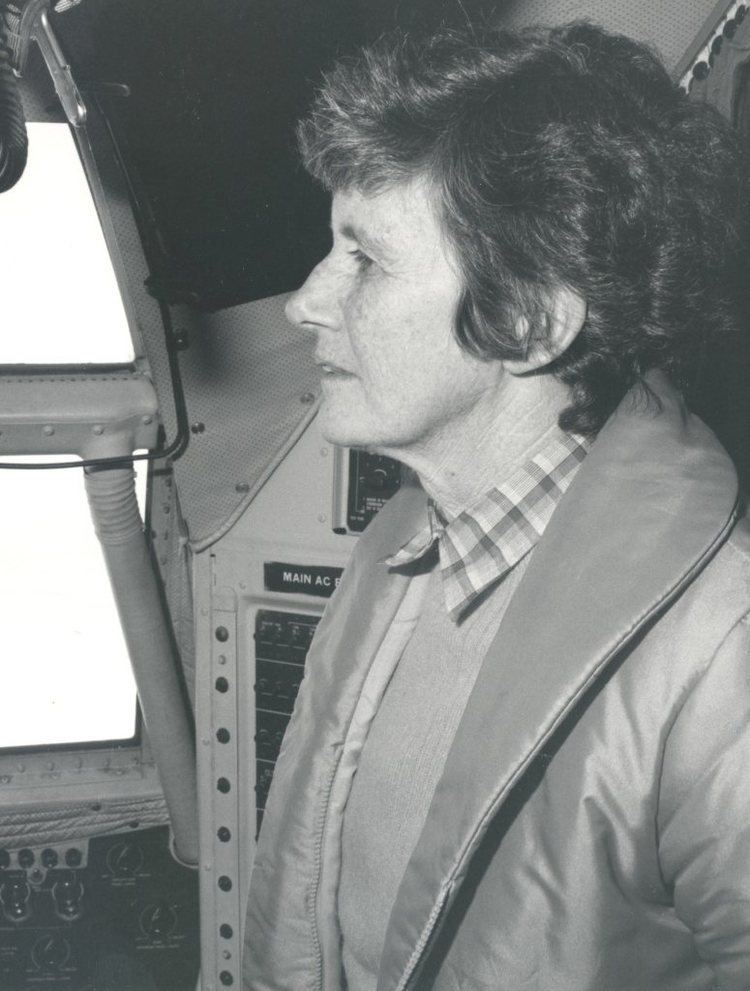
Olive Zakharov was an Australian Labor senator, teacher, psychologist, feminist, humanist and one of the earliest political voices for LGBT+ rights in the Australian Parliament. Born in Kew, Melbourne, she worked as a fruit picker, waitress, shop assistant, clerk and teacher before entering the Senate in 1983, bringing with her a fierce commitment to those she described as people “isolated from the realities of life.”
In her maiden Senate speech, Zakharov described herself as “a socialist, a unionist and a feminist.” She was as good as her word: she chaired Senate committees on employment, education and community affairs; introduced humanist counselling into secondary schools; campaigned publicly against domestic violence by sharing her own decade-long experience of abuse; and was a member of both the Humanist Society of Victoria and the Victorian AIDS Council. In 1984 she was named Australian Humanist of the Year — the second person ever to receive the award — in recognition of her support for equality for women, rights of the disadvantaged, and homosexual rights.
In June 1992, she was among the first voices in the Australian Parliament to argue for the right of gay and lesbian people to serve in the armed forces. She represented Australia at the Vienna Peace Conference in 1987 and witnessed the first destruction of a nuclear missile in the USSR in 1988.
She was, as former Victorian Premier Joan Kirner said, “a woman who’d experienced the struggles of women — all the issues that make up the social fabric of Australia are the issues that Olive touched on.”
On 12 February 1995, Olive was struck by a car while crossing St Kilda Road after leaving Midsumma — Melbourne’s LGBT+ arts and culture festival — where she had been celebrating with the community she had spent her political life defending. She never regained consciousness. The Senate sat for over two hours to hear condolence motions. Several red roses — the symbol of the international socialist movement — were placed upon her desk. A memorial plaque was unveiled in the courtyard at Parliament House. Olive’s Corner in Port Melbourne commemorates her life and values to this day.